Showing posts with label los angeles. Show all posts

Friday, February 20, 2009

Should We Call It Mails, or Rurb? Yahuda Katz Clears Things Up At The LA Ruby Meetup

We just had a fun time at the latest LA Ruby Meetup, once again at UCLA. This time, we had presentations by James Foster from Gemstone, and Yehuda Katz from Engine Yard.

James Foster was showing MagLev, which is a Ruby VM based on top of the Gemstone Smalltalk VM. Not much to see here, just some Ruby code benchmarks running at about 4-5X faster than Ruby 1.8.6. That is, of course, not a very fair comparison, but no question that this is another Ruby VM to watch. His talk ended with the ever popular demo showing how Seaside does continuations, plus running the Smalltalk class browser right in the web browser and editing some code. Yes, this does kick serious butt, but it would be nice to see something new from the SmallTalk universe. I've seen all this from them two years ago, thanks to Avi Bryant.

The second presentation was where things got a lot more interesting. Yehuda Katz is well known to hard-core developers, thanks to his work on jQuery and Merb. He has also been very vocal about his differences of philosophy with the Rails way of doing things. Given the fairly recent announcement of the Merb project merging with the Ruby on Rails project, we all wanted to know, like, what's up?

As explanation, Yehuda gave a really complete history of Ruby on Rails. He showed slides of DHH's first Mac, he had dates and times of the first SVN commits for Rails. He explained the back story of what was going on in DHH's life while he was creating the first version of Rails. This was all ostensibly to justify that Ruby on Rails and Merb started with the same sort of motivations.

OK, great. That was fun. But what about the real dirt? He did not say anything directly, but my take on it was: when you really look at it, Merb was already turning into Rails++ so why not just merge all that effort into Rails itself? Putting too much emphasis into a separate framework also did not help sell services to the million Rails users out there, which is what Engine Yard's investors need them to be doing.

Yehuda was obviously comfortable with it, even thou he quipped about how many times he said "No!" when first presented with the concept of the great merge. But Merb seems to have the implementation, and Rails the sugar, plus the momentum, so your peanut butter is now in my chocolate. And the big winner? Has to be Rack, or the "Unix of web servers" as Yehuda called it.

Personally, I think it sounds great. Adding some API rigor to Rails will make it a lot more stable of platform for long-term development. And let us not forget that ezmobius has been contributing performance improvements back into Rails for a long time, so nothing shocking there. Just more good stuff for the Ruby web development community.

Saturday, January 31, 2009

Los Angeles + Ruby = LARubyConf 2009

It is with great excitement that I want to tell all of you about the first annual Los Angeles Ruby Conference. Thanks to the fine efforts of a bunch of LA's hardworking Rubyists, and the generous financial support of AT&T Interactive, we are preparing to bring the noise to Los Angeles on April 4, 2009.

Too many of these wannabe cities have been smoking us with their regional conferences, but no more! Time for we Angelinos to step up and be counted among the world's important Ruby communities. All joking aside, it really is time for us to share our enthusiasm and experience, and grow beyond just the local scene.

I am helping out with the organization of the conference, which means a good chance to showcase other people. We are recruiting presenters, sponsors, and most importantly attendees! There will for sure be something for everyone, at all levels of experience.

Here is what you should do:

Want to attend? Register now for the early bird price of $75
Have something cool to talk about? We want your proposal
Want to sponsor the conference? Yes, we want you, click here

We need your support, people. Let's have a great time, learn from each other, and make it a big success. 'Nuff said.

Sunday, January 25, 2009

In My Hood

I was taking my morning constitutional with my youngest son, when I noticed my neighbor who programs at JPL had added a new placard to the artistic decor attached to his fence.

And who says there is no software development in Los Angeles?

Wednesday, April 23, 2008

April Is For AOL

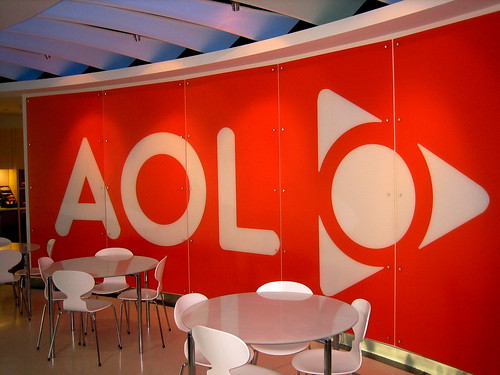
Last night was the always fun Los Angeles web application developer Meetup, this time at AOL in Beverly Hills. After navigating a veritable maze of cubes, we found ourselves in a fairly large screening room chock full of AV equipment, accompanied by a large pile of pizza boxes. A few moments later, the throng of LA-based developers shuffled in, ready for the latest and greatest. The prerequisites fulfilled, we got down to some serious techno-babble.

First up was Omer Singer from DigiTrust, talking about Web Application Firewalls. Although it strayed a little closely to a sales pitch, Omer was able to tie it together with his definition of "defense in depth", which is simply enough having multiple layers of overlapping protection. One good point that he raised which is often overlooked is the cost of "brand-damage" in the marketplace from a web application being hacked. There were several good security related question asked afterwards, so yes the crown was paying close attention.

Next, was Mitch Hashimoto recent hire at CitrusByte, with a brief overview of the newly beta released Google App Engine. Mitch took us on a brief tour of the main capabilities of the Python-based system, like a Datastore API (based on BigTable), and the Users API (based on the Goog's own account authentication database). If you like Python, and don't mind doing everything the Google Way and no other, then the App Engine might be for you.

After Mitch, I did a presentation about Frankie, my newly released Ruby gem for easy development of Facebook applications. If you don't yet know, Frankie uses the Sinatra web server and the Facebooker gem to allow you to create a basic Facebook application with only 10 lines of Ruby. I also did a brief demo of a new, super-secret web thing that I have been working on for a little while... more will be revealed soon!

Last up was programming chum and Ruby expert Ari Lerner, talking about Amazon's EC2 service, and showing a little of another upcoming pet project of ours called "Pool Party", which makes it easy to deploy an auto-scaling application to the EC2 cloud.

It was a really great meetup, and the turnout was really good. Thanks to the persistent efforts of organizer Will Jessup, the community in LA is really thriving, and we were even able to keep the annoyance of non-technical recruiter sales pitches away. Great job, everyone!

Wednesday, October 24, 2007

More Developer Fun In Los Angeles

Last night was the always entertaining Los Angeles Application Developer Meetup. L.A. is not known for the same massive quantity of developers as the bay area, for example, but having joined forces with the LA Ruby on Rails Meetup crew some time back, the monthly event is still growing.

This month's was held at the impressive new digs of YellowPages.com, who have been busy building out a huge Ruby on Rails based local search replacement for their venerable 100K+ lines of Java code. Thanks for the great sandwiches, boys... next time, buy beer!

Anyhow, four presentations took place on various fun topics of technical interest. First, Jeff Yamada and his associate (sorry I didn't catch your name) showed AIR. I then did a short presentation on Continuous Integration and CruiseControl.rb. Olmo Maldonado talked about his impressive JavaScript library MooTools, and then Ari Lerner showed his just-relased Ruby web development framework, Sinatra.

AIR
Long, long ago, I used to work with Flash and ActionScript. Most of us more "serious" programmers were always very frustrated with the language, the programming environment, pretty much everything except for the final product. Since then Adobe has introduced technologies like Flex and AIR to try to address the shortcomings of using Flash as a "real" development tool. Yamada and friend are the authors of the upcoming book "AIR Bible". AIR nee Apollo is designed to provide a way to create native OS applications, while using the toolset that Flash/Flex developers are used to. If you are into Flash/Flex already, then this is probably great for you, but I am not overly in love with so many angle brackets mixed in my code... let's just say that "it ain't Ruby". One small thing I will suggest to the boys: please try to find some relevant application to show for a demo a of a new technology. Between this, and what all of the Microsofties were show a few months back for Silverlight, no one is going to take this new desktop app paradigm seriously!

How To Get Your Code Together and Keep It That Way
Then I did a presentation myself, called "How To Get Your Code Together and Keep It That Way". It was really an exhortation to use the best practice of Continuous Integration, while showing how easy it is to get started with the ultra-cool CI tool CruiseControl.rb. If you are a Rails dev, and you are not using CruiseControl.rb yet, you should be. If you have a development project with greater than zero developers, it is worth it to setup a CI system, even just to keep yourself in check. You can get a copy of my presentation here. But don't just believe me, it is in yesterday's O'Reilly Radar too.

As I was demoing the CC.rb project page, where they are doing CI builds of both CruiseControl.rb itself and the Ruby on Rails project, I noticed that the Rails build has had failing unit tests since Oct. 3. What is up with that? Let's get on it boys!

MooTools
Next up was Olmo Maldonado, once of the authors of MooTools. MooTools is a JavaScript framework for web development along the lines of Prototype or jQuery. I had been hearing about MooTools, but hadn't really checked it out. Naturally, since both of those other JS frameworks already exist, and with Prototype really having dominated in the acceptance wars, MooTools does have a different approach on several levels to justify its existence.

Heavily optimized for speed, according to Maldonado, Moo performs much faster than either Prototype or jQuery on the slickspeed benchmark test at performing DOM selects, which is the core convenience provided by any JS framework.

Another difference is that MooTools libs are completely orthogonal. As such, the developer only needs to incorporate the specific libs that contain the functionality that is required for that application, unlike both Prototype and jQuery which require downloading the entire framework to use any part of it.

MooTools seems to have a more serious emphasis on good software devlopment practices than the othe JS framework projects. One example of this is that MooTools was developed using JSSpec, which is a Behavior Driven Development framework for JavaScript.

Already up to version 1.2, MooTools has been adopted in some very interesting places. The three demos that Maldonado showed were the iPhone version of the Pop-Cap game Bejeweled, the Ubuntu.com website, and then most curious of all, the Microsoft Expression website! What, M$ couldn't use Silverlight? Oh yeah, everyone already has Javascript... no additional download required. Whatever happened to that famous dogfooding?

MooTools is realy designed for the developer who wants to work in pure JavaScript. Most Rails devs like to use the Ruby on Rails Prototype helpers to do nice AJAX-y things like edit in-place and auto-complete functionality. MooTools does all that, plus has a bunch of UI gadgetry too, but having no inline functions, is not really compatible with the way the Rails helpers work. Perhaps someone will create a Rails plug-in that can collect up all of the MooTools Javascript, kida like what the Unobtrusive Javascript plugin does... for those Rails people who want to take advanatge of the DSL-like syntax, instead of dropping all the way into JavaScript.

Sinatra
Speaking of DSLs, the final presentation of the evening was by Ari Lerner, showing his incredibly cool new little Ruby web framework called Sinatra. In fact, I was so impressed by Sinatra, that I decided to give it its own posting. I suggest you go check it out right now!

Thursday, July 26, 2007

Fun At Yahoo! In Los Angeles

Last Tuesday night was July's Los Angeles Web Application Developer Meetup. This event is starting to get really good. Not only were there lots of people who came out, but our hosts Yahoo! actually bought us beer too. Hint to future hosts of the meetup... be cool like Yahoo! and provide BOTH a projection screen and beer.

There were two especially fun presentations, at least to me. Jim Bumgardner of Yahoo showed off some of his really interesting web gadgetry. Now I didn't know Jim when I walked into the meetup, but I have seen his work. The man has done some innovative stuff over the years, that is for sure. Also, he has to have one of the best gigs I have seen for a while, getting paid to build really fun things.

He showed several different ways to choose one item from a group of items, without resorting to any of the usual tired UI metaphors. My personal favorite was the Wheel of Lunch.

The other extra fun presentation was Richard Herrera showing Pickleview, an iPhone application created to track real-time baseball scores. Now if they were soccer scores, I would have had to run out and get an iPhone... actually, I may just end up doing that anyhow. But I digress.

Developed in PHP (but we won't hold that against them, will you, dear reader?), Pickleview combines an XML feed of Major League Baseball scores, and mashes it up with Twitter. A pretty cool little application, I would have to say.

Now I am getting interested in whipping up something for the iPhone myself... stay tuned.

Thursday, June 14, 2007

A Little Bit Of Merb In Los Angeles

Last night, I gave a short presentation on Ezra Z's cool Ruby web development framework Merb at the Los Angeles Web Developer Meetup. Microsoft was kind enough to provide space at their new downtown offices, and even buy pizza. Can you say "(munch munch) Silver (crunch) light (munch) launch (gulp) budget"?

When I started my presentation, I asked the room how many people were using Ruby on Rails. Almost everyone in the place raised their hand. Nice! My talk was a brief review of what Merb is, and some of the similarities and differences with Rails. The crowd was very attentive, and there were some good followup questions asked afterward.

Anyone who is interested in the slides from my presentation, they are available here.

There were also presentations by Ari Lerner about Ruby metaprogramming, and Ben Sandofsky on the Seaside web framework. I especially liked the example that Ben used to illustrate continuations.

Lastly was Woody Pewitt, the Microsoftie tasked with demoing Silverlight. It was funny how long it took their poor projector to recover when he plugged in his Vista notebook to show his demo, given that every other presenter was using a Mac. Woody was a good sport about it, and there really is a lot of interest in Silverlight right now, so I saw a number of people talking to him after the demo.

Anyhow, a good time was had by all, and I am looking forward to the next one. Here in L.A. we have a thriving little tech scene of our own, albeit not as huge as the bay. But don't count us out!